
How to protect a rental deposit in South Africa — without the move-out fight

Ask around and every landlord has a deposit war story — a geyser, a bathroom ceiling stain nobody can put a date to, three weeks of increasingly tense WhatsApp voice notes, and no proof either way. Both sides end up doing what most people do: argue, half-settle, and walk away annoyed.
The uncomfortable part is that the fight was usually decided long before move-out. It was decided on the day the tenant got the keys, when nobody wrote anything down.
What the law actually expects
South Africa's Rental Housing Act is pretty clear about this, and most landlords have never read it. Before the tenant moves in, you're meant to inspect the property together and note any existing defects; at the end of the lease you inspect again, also together, to see what's changed. Skipping either inspection is expensive: under section 5(3)(j) a landlord who doesn't inspect in the tenant's presence is deemed to have acknowledged the place came back in a good and proper state of repair — no further claim against the tenant, and the full deposit plus interest must be refunded. It cuts differently depending on who skipped which inspection, but a missed incoming inspection lands squarely on the landlord.
And if it does end in a standoff, the tenant can take it to their provincial Rental Housing Tribunal. Tribunals deal in evidence. "I'm pretty sure that mark wasn't there" is not evidence. A dated, signed report with photos is — though even a good report is weighed against everything else, never decisive on its own.
The move-in inspection is your insurance policy
Think of the incoming inspection as the cheapest insurance you'll ever buy. Twenty minutes walking the property with your phone, room by room, photographing anything that's already worn, chipped or stained. That baseline is the whole game. When the tenant leaves, you're not arguing about opinions — you're comparing two sets of evidence taken months apart.
What a report needs to actually hold up
A photo dumped in a chat thread isn't a record — it's a photo. A proper inspection report ties everything together so it reads as one document months later. Here's the difference at a glance:
| WhatsApp photos | A proper inspection report |
|---|---|
| Scattered across a chat | One report, organised room by room |
| No condition rating | Each item rated (excellent → damaged) with notes |
| Easy to dispute "when" | Dated, with both signatures |
| Hard to hand over | One PDF you can email or print |
The structure is what matters: a room-by-room checklist, a clear condition rating on every item, photo evidence attached to the room it belongs to, and a signature from both parties confirming they agree. Get those four things and most disputes simply never start.
Move-out: compare, don't argue
When the lease ends, pull up the original report and walk the same checklist. Fair wear and tear is expressly protected by the Act — section 4(5) lets a landlord recover the property in a good state of repair save for fair wear and tear, so a slightly faded wall after two years isn't damage. But a cracked basin that was photographed intact on day one? That's a conversation backed by a date and a picture, not a hunch. Deductions become obvious and defensible, and tenants are far more reasonable when they can see the before-and-after themselves. If it does turn into a formal dispute, what matters next is which records actually carry weight — and which don't.
Doing it in ten minutes, from your phone
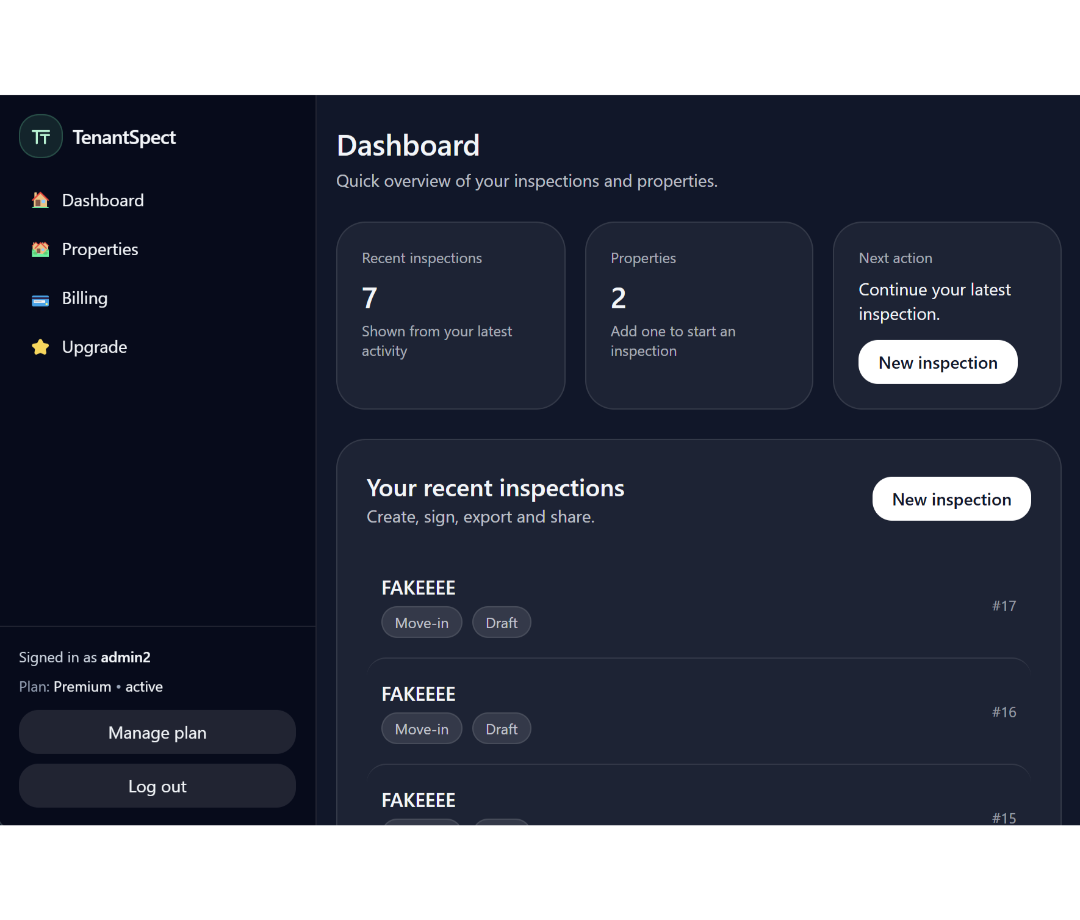
This is exactly why we built TenantSpect. You add a property, start a move-in or move-out inspection, and walk through a ready-made room checklist — tapping a condition for each item and snapping photos as you go. When you're done, the tenant signs on your phone, or you send them a secure link (WhatsApp works perfectly) and they sign on theirs. No app store, no account for them to create, no friction. Out pops a clean PDF for both of you to keep.
You can do your first inspection free — create an account and try it on a real property before you commit to anything. If you manage a few places, the paid plans add unlimited reports and your own branding on the PDF.
A 60-second checklist before your next tenant moves in
- Inspect before the tenant moves in, not after.
- Go room by room — walls, floors, windows, fittings, the geyser, the works.
- Photograph anything already damaged, and note it.
- Get both signatures on the same dated report.
- Store it somewhere you'll still find it in two years.
- Do the exact same walk at move-out and compare.
None of this is complicated — it's the inspection habit the rest of the Rental Inspection Toolkit is built around. It's just the bit everyone skips, until the day a deposit turns into a three-week argument nobody wins.